
Have you ever wondered whether to write smoky or smokey? Both spellings look familiar, and although they are pronounced the same way, choosing the right one depends on the context. Whether you’re describing a smoky room, a barbecue flavor, a hazy landscape, or someone’s name, understanding the difference can help you write more accurately.
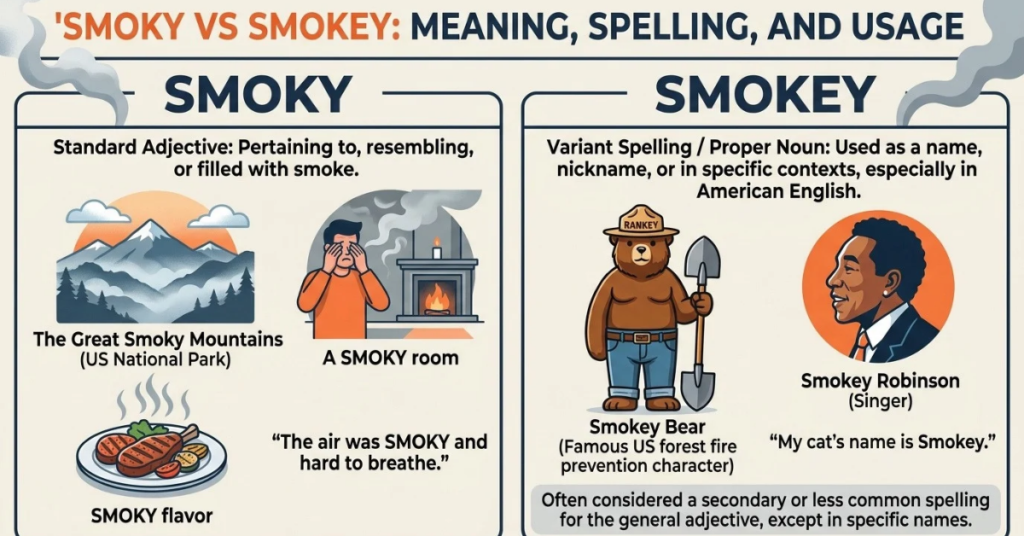
When comparing smoky vs smokey, the key distinction is that smoky is the standard English spelling of the adjective, while Smokey is commonly used as a personal name, nickname, or proper noun. Although the two forms are sometimes used interchangeably in informal writing, they do not serve exactly the same purpose.
Let’s explore their meanings, grammatical uses, examples, and the situations in which each spelling is appropriate.
Smoky vs Smokey: What Is the Difference?
The main difference between smoky and smokey is how each spelling is conventionally used.
- Smoky: The standard adjective describing something that contains, produces, resembles, or smells of smoke.
- Smokey: A spelling most commonly associated with names, nicknames, and specific titles or brands. It also appears as an informal or nonstandard variant of the adjective.
For example, if you are describing a room filled with smoke, the usual spelling is “a smoky room.” If you are referring to a person whose nickname is Smokey, you should preserve that spelling.
| Word | Main use | Example |
|---|---|---|
| Smoky | Standard adjective | The kitchen became smoky. |
| Smokey | Name or nickname | Smokey is my grandfather’s nickname. |
| Smokey | Proper names and titles | Smokey Bear is a well-known fire-prevention mascot. |
The easiest way to remember the distinction is to use smoky for ordinary descriptions and Smokey when referring to a name or an established title.
What Does Smoky Mean?
Smoky is an adjective that describes something associated with smoke. It can refer to visible smoke, a smell, a flavor, a color, or an appearance that resembles smoke.
The word is commonly used in everyday conversation, cooking, home descriptions, fashion, and creative writing.
Examples of Smoky in a Sentence
Here are several examples showing how to use smoky correctly:
- The fireplace filled the living room with a smoky smell.
- We enjoyed smoky barbecue ribs at the restaurant.
- A smoky haze covered the hills in the distance.
- She wore smoky eye makeup for the evening event.
- The whisky had a rich, smoky flavor.
- The old factory released smoky fumes into the air.
In each example, smoky describes a quality or characteristic rather than identifying a person or a specific named entity.
Common Uses of the Word Smoky
The meaning of smoky can change slightly depending on the subject being described.
1. Smoky smell: A scent resembling burning wood, tobacco, or other smoke.
2. Smoky flavor: A taste associated with smoke, often found in grilled foods, smoked meats, and certain cheeses.
3. Smoky appearance: A hazy, misty, or smoke-like visual effect.
4. Smoky eyes: A makeup style featuring blended, dark eyeshadow around the eyes.
5. Smoky atmosphere: An environment containing smoke or appearing hazy because of it.
These examples show why smoky is the preferred spelling in standard descriptive writing.
What Does Smokey Mean?
Smokey is most familiar as a proper name, nickname, or part of an established title. It can be used for people, fictional characters, mascots, and other named entities.
Unlike the standard adjective smoky, the spelling Smokey is not generally preferred in formal writing when describing something that contains or resembles smoke.
Examples of Smokey in a Sentence
- Smokey is the nickname my uncle has used for years.
- Smokey Bear teaches children about preventing wildfires.
- My friend named his dog Smokey because of its gray fur.
- The character Smokey became popular among fans of the film.
Notice that Smokey is capitalized when it begins a sentence or functions as a proper name. Capitalization is important because it signals that the word identifies a particular person, character, or named figure.
Why Is Smokey Used as a Name?
Nicknames do not always follow the standard spelling conventions used for ordinary English words. A person might be called Smokey because of their hair color, personality, occupation, or an association with smoke.
The spelling can also become established through popular culture. For example, Smokey Bear is the official name of a famous American wildfire-prevention mascot. Its established spelling should not be changed to “Smoky Bear” when referring to that character.
This is a useful reminder that proper names often retain their own spelling, even when it differs from the usual form of a related word.
Smoky vs Smokey in American and British English
A common question is whether the difference between smoky and smokey comes from American and British English.
Generally, it does not. Smoky is the standard adjective in both American and British English. The spelling smokey is commonly encountered in names, nicknames, and informal writing rather than as a separate regional standard.
For instance, both American and British writers would normally write:
- The air was smoky after the fire.
- The restaurant serves smoky grilled vegetables.
- She chose a smoky shade of gray for the walls.
However, if a person, business, product, or character uses the spelling Smokey as part of its name, that spelling should be preserved.
When writing an academic paper, professional email, article, or other formal document, choose smoky for the adjective unless you are referring to a specific proper noun.
Smoky vs Smokey in Different Contexts
The easiest way to choose between the two spellings is to consider what you are describing.
1. Food and Cooking
In food writing, smoky describes a flavor or aroma associated with smoke.
Correct examples:
- This sauce has a deep, smoky flavor.
- The chef prepared smoky grilled chicken.
- I prefer smoky barbecue seasoning.
Writing “smokey flavor” is sometimes seen on menus and product packaging, but smoky flavor is the standard choice in general English.
2. Makeup and Beauty
The familiar makeup term is smoky eye or smoky eyes.
For example:
- She created a smoky eye using black and bronze eyeshadow.
- A smoky makeup look can add depth to the eyes.
Although “smokey eye” appears in informal beauty content and product descriptions, smoky eye is the conventional spelling.
3. Weather and the Environment
When describing air, skies, or an area affected by smoke, use smoky.
Examples:
- The city looked smoky because of the nearby wildfire.
- Smoky air made it difficult to see the mountains.
- Residents were advised to avoid areas with heavy smoke.
In these examples, smokey would generally be an unnecessary spelling variation.
4. Names and Nicknames
Use Smokey when it is the established spelling of someone’s name or nickname.
Examples:
- Smokey is the name of our family dog.
- The performer is known by the nickname Smokey.
- Smokey Bear is associated with wildfire prevention in the United States.
In these cases, replacing Smokey with Smoky could incorrectly change the name.
Why Do People Confuse Smoky and Smokey?
The confusion is understandable because the two words sound identical in ordinary pronunciation. Both contain the same basic word, smoke, and both can be associated with smoke-related descriptions.
There are three main reasons people mix them up.
Similar pronunciation: Neither spelling usually changes how the word is spoken, so listening alone will not help you decide which one to write.
Informal spelling variations: Online posts, product descriptions, restaurant menus, and social media captions sometimes use smokey as an adjective.
Proper names: Familiar names such as Smokey Bear reinforce the spelling with an “e,” even though the ordinary adjective is spelled smoky.
The most reliable solution is to consider the purpose of the word. If it describes a smell, taste, appearance, or atmosphere, use smoky. If it is part of a recognized name, retain the spelling used by that person or organization.
How to Remember the Correct Spelling
If you frequently confuse smoky and smokey, a simple rule can help:
Use “smoky” to describe something and “Smokey” to name someone or something.
For example:
- A smoky kitchen describes the condition of the kitchen.
- A smoky barbecue sauce describes the sauce’s flavor.
- Smokey the dog identifies a particular animal.
- Smokey Bear identifies a specific mascot.
This is a useful general guideline rather than an absolute rule, because informal spellings and established names can vary. Nevertheless, it works well for most everyday writing.
For professional content, including website articles, academic assignments, business communications, and product descriptions, smoky is the safer choice whenever you need the standard adjective.
Frequently Asked Questions About Smoky vs Smokey
1. Is smoky or smokey the correct spelling?
Smoky is the standard spelling of the adjective in everyday English. However, smokey is also recognized by some dictionaries as a spelling variant. Use the spelling that fits your context, particularly when writing a proper name. Merriam-Webster
2. Is smokey a real word?
Yes. Smokey is a recognized spelling variant of smoky, and it is also used in proper names and certain expressions. Although it is not the preferred spelling in most standard descriptive writing, it is not always incorrect.
3. Is it smoky flavor or smokey flavor?
Smoky flavor is the conventional spelling in standard English. It describes the rich, distinctive taste associated with smoke, smoked ingredients, or certain cooking techniques.
For example: “The grilled vegetables had a delicious smoky flavor.”
4. Is it smoky eyes or smokey eyes?
Smoky eyes is the conventional spelling for the makeup style. The term describes an eye makeup technique that uses blended eyeshadow, often in darker shades, to create a soft, smoky appearance.
You may see smokey eyes in informal beauty content or product names, but smoky eyes is the standard choice.
5. Are smoky and smokey pronounced the same?
Yes. In ordinary English pronunciation, both spellings are generally pronounced the same way, approximately “SMOH-kee.” The difference is primarily spelling and usage, not pronunciation.
6. Is Smokey Bear or Smoky Bear correct?
Smokey Bear is the official name of the American wildfire-prevention mascot. The spelling is part of the character’s established name and should be preserved. U.S. National Park Service
7. Is smokey an American or British spelling?
Neither spelling is exclusively American or British. Smoky is the standard adjective in both varieties of English, while smokey is an accepted variant in some dictionaries. Its use as a proper name depends on the specific name rather than regional spelling rules.
8. Can I use smokey in a formal article?
You can use Smokey when referring to a person, character, or other entity whose name uses that spelling. For a general description in a formal article, smoky is usually the better choice.
For example, write “a smoky atmosphere” rather than “a smokey atmosphere” unless you are reproducing a particular brand’s wording or a deliberate stylistic choice.
Conclusion: Smoky vs Smokey Explained
When it comes to smoky vs smokey, the difference is straightforward once you understand the context. Smoky is the standard adjective used to describe smoke, a smoke-like appearance, or a distinctive flavor. Smokey is especially common in personal names, nicknames, and established titles, although it can also appear as an alternative spelling of the adjective.
Remember these simple guidelines:
- Use smoky for food, smells, air, colors, makeup, and other descriptions.
- Use Smokey when that is the established spelling of a name or title.
- Follow the spelling used by the person, brand, or organization you are referring to.
The next time you are unsure which spelling to choose, consider whether you are describing a characteristic or identifying something by name. This small distinction will help you write more clearly and confidently.
For more practical spelling comparisons, explore related guides on commonly confused English words to strengthen your grammar and everyday writing skills.
