
Have you ever wondered whether to write honey or hunny when texting someone you love? Both spellings appear in messages, social media posts, and affectionate nicknames, so it is easy to get confused about which one is correct.
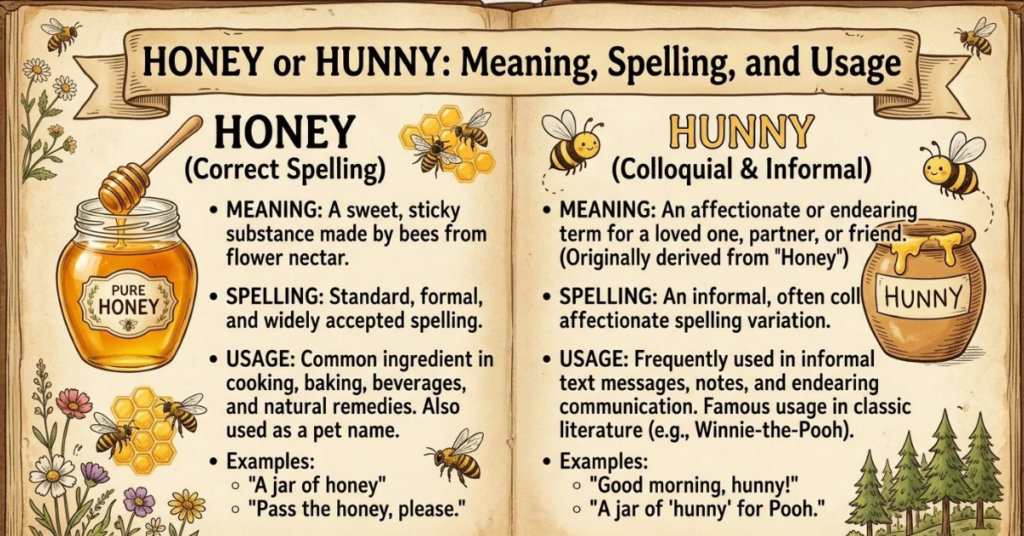
The answer is simple: honey is the standard English spelling, while hunny is an informal, playful variation often used as a pet name. Both can express affection, but they are not interchangeable in every situation.
Whether you are writing a sweet message to your partner, replying with “thanks, honey,” or choosing a cute nickname for someone special, understanding the difference between honey and hunny will help you choose the right spelling.
Honey or Hunny: What Is the Difference?
The main difference between honey and hunny is spelling and usage. Although both can communicate warmth and affection, only honey is the standard spelling recognized in formal English.
What Does Honey Mean?
The word honey has two common meanings.
First, it refers to the sweet substance made by bees from flower nectar. Honey is widely used as a natural sweetener in foods and drinks.
Second, honey is a term of endearment used to address someone affectionately. People may call their romantic partners, children, close friends, or other loved ones “honey.”
For example:
- “Good morning, honey!”
- “Thank you for helping me, honey.”
- “I bought some honey for your tea.”
In the first two examples, honey expresses affection. In the last example, it refers to the food.
What Does Hunny Mean?
Hunny is an informal spelling of honey that people sometimes use in texts, online conversations, and affectionate nicknames. It does not have a separate, universally accepted meaning from honey when used as a pet name.
The spelling feels playful, cute, and personal. Someone might choose hunny because it looks softer or more distinctive in a message.
For example:
- “Goodnight, hunny”
- “Miss you, hunny!”
- “Thanks, hunny, you’re the best.”
However, hunny is not the preferred spelling in formal writing, professional communication, or standard English usage.
Is It Honey or Hunny?
If you are unsure which spelling to use, choose honey for general use and hunny when you intentionally want an informal or playful style.
Here is a quick comparison:
| Feature | Honey | Hunny |
|---|---|---|
| Standard English spelling | Yes | No |
| Common term of endearment | Yes | Yes, informally |
| Suitable for formal writing | Yes, when appropriate to the context | Generally no |
| Common in romantic texts | Yes | Yes |
| Suitable as a cute nickname | Yes | Yes |
| Refers to the sweet food | Yes | Not in standard usage |
The important thing to remember is that hunny is a stylistic choice, not a replacement for honey in every sentence. If you are writing an article, an email, or a school assignment, use honey unless you are discussing the informal spelling itself.
Honey or Hunny for Endearment?
When used as a term of endearment, both spellings can communicate love, care, or affection. The best option depends on your relationship with the person and the tone you want to convey.
Honey is a familiar, traditional pet name. It can sound loving, gentle, comforting, or even casual, depending on how it is used.
Hunny often feels more playful and informal. It can be a good choice for private messages, cute captions, or a nickname that feels unique to your relationship.
For example, “I love you, honey” sounds natural and classic. “I love you, hunny” conveys a similar message but gives it a more personalized, playful appearance.
Neither spelling automatically communicates stronger feelings than the other. The words you use, your tone, and the nature of your relationship matter much more.
Honey or Hunny for a Partner?
If you want to choose a pet name for your boyfriend, girlfriend, husband, wife, or romantic partner, both spellings can work.
Honey for a Romantic Partner
Honey is a good choice if you prefer a timeless, affectionate nickname. It works in everyday conversations as well as loving messages.
Examples include:
- “I hope you have a beautiful day, honey.”
- “I miss you so much, honey.”
- “Thank you for always being there for me, honey.”
- “Goodnight, honey. Sweet dreams!”
This spelling is especially useful when you want your message to sound natural without appearing overly playful.
Hunny for a Romantic Partner
Hunny may suit you better if you enjoy cute, casual, or personalized expressions of affection. It is common in informal digital communication, although individual preferences vary.
Examples include:
- “Morning, hunny! Have a great day.”
- “I can’t wait to see you, hunny.”
- “You’re my favorite person, hunny.”
- “Love you, hunny”
If your partner already uses hunny, matching their preferred spelling can make your conversations feel more natural. Ultimately, the best pet name is one that both people enjoy.
Is It Honey or Hunny When Talking to a Female?
Both spellings can be used when addressing a woman, girlfriend, wife, or female friend. Neither is restricted to a particular gender.
Honey is the more conventional choice when you want to sound affectionate and natural. Hunny is suitable if you want a cute or playful tone.
For example:
- “You look beautiful today, honey.”
- “Thank you for everything, hunny.”
- “How was your day, honey?”
- “Good luck with your interview, hunny!”
However, context matters. A romantic partner may appreciate the nickname, while a colleague or casual acquaintance might find it overly familiar. When in doubt, use the person’s name or ask what they prefer.
Is It Honey or Hunny When Talking to a Male?
The same rule applies when talking to a man. You can call a boyfriend, husband, male friend, or loved one honey or hunny, depending on your relationship and personal style.
Examples of using honey include:
- “Are you home yet, honey?”
- “I made your favorite dinner, honey.”
- “Take care of yourself, honey.”
Examples of using hunny include:
- “Good morning, hunny!”
- “You’re so sweet, hunny.”
- “Thanks for helping me, hunny”
Neither spelling is specifically masculine or feminine. The choice is about tone, familiarity, and personal preference rather than gender.
Honey or Hunny for a Nickname?
If you are choosing a nickname for someone, consider the impression you want to create.
Choose honey if you want a classic nickname that people immediately recognize. It works well for partners, family members, and other loved ones.
Choose hunny if you prefer something casual, playful, or slightly different from the usual spelling. It may feel more personal in a private conversation or a social media caption.
Here are some ways to use each spelling:
| Situation | Suggested spelling | Example |
|---|---|---|
| Romantic message | Honey | “I love you, honey.” |
| Cute text message | Hunny | “Miss you, hunny!” |
| Message to a family member | Honey | “Are you feeling better, honey?” |
| Playful nickname | Hunny | “Hey, hunny bear!” |
| Formal article or assignment | Honey | “Honey is a common term of endearment.” |
| Personalized contact name | Either | “Honey” or “Hunny” |
There is no strict rule for a personal nickname. If the person likes the spelling hunny, using it is perfectly reasonable in informal communication.
Is “Thanks Honey” or “Thanks Hunny” Correct?
Both expressions can be understood in casual messages, but “Thanks, honey” is the standard and grammatically preferred version.
The comma matters because honey is being used to address the person directly.
Examples:
- “Thanks, honey, for picking me up.”
- “Thanks, honey! I really appreciate it.”
- “Thanks, hunny”
- “Thank you, honey, for always supporting me.”
The first two use standard spelling. The third is an informal alternative that may suit a friendly or romantic text.
If you are writing to someone you do not know well, consider saying “Thanks so much” or “Thank you for your help” instead. Terms of endearment can sound warm in close relationships but overly familiar in other situations.
Why Do People Spell Honey as Hunny?
People use hunny for several reasons, especially in digital communication.
- Personal style: Some people simply prefer how hunny looks in a message.
- Playfulness: The spelling can make a nickname feel cute or less formal.
- Relationship traditions: Couples sometimes develop their own spellings and expressions.
- Social media: Informal spellings are common in captions, comments, and usernames.
- Individual preference: A person may have used hunny for years and associate it with someone special.
These reasons explain why the spelling appears so often in casual conversations. However, its popularity in texting does not make it the standard spelling of the word.
Common Mistakes When Using Honey or Hunny
Although the difference is straightforward, a few mistakes are worth avoiding.
Using Hunny in Formal Writing
Hunny is fine as an informal nickname, but it is not appropriate when standard spelling is expected. Use honey in articles, schoolwork, professional writing, and other formal contexts.
Assuming Hunny Has a Different Meaning
When used affectionately, hunny generally means the same thing as honey. It does not automatically indicate a deeper relationship, greater love, or a different emotional intention.
Assuming Honey Is Only for Romantic Partners
Honey is not exclusively a romantic term. Parents may use it for children, and some people use it with friends or family members. Still, whether it feels appropriate depends on cultural norms, individual preferences, and the relationship.
Using Terms of Endearment Without Considering Context
A sweet nickname can be welcome in one conversation and uncomfortable in another. Avoid assuming everyone likes being called honey or hunny, particularly in professional or unfamiliar settings.
How to Choose Between Honey and Hunny
If you still cannot decide, use this simple process:
- Consider the setting. Use honey for standard writing and hunny for informal messages.
- Think about the relationship. A playful spelling may suit a partner but not a professional contact.
- Consider the recipient’s preference. If they like one spelling, use that one.
- Read the message aloud. Choose the spelling that fits the tone you want to convey.
- Keep it natural. You do not need to use an unusual spelling to make a message feel affectionate.
For example, “Thank you, honey, for making my day better” is warm and conventional. “Aww, thanks, hunny” feels more casual and playful.
Both can work beautifully when they suit the conversation.
Frequently Asked Questions About Honey or Hunny
1. Is it honey or hunny?
Honey is the correct standard English spelling. Hunny is an informal alternative commonly used as a cute nickname or term of endearment in texts and social media messages.
2. Is honey or hunny better for a partner?
Both are suitable for a romantic partner. Honey sounds classic and affectionate, while hunny can feel playful and personal. Choose the spelling your partner prefers.
3. Is it honey or hunny when talking to a female?
Both spellings can be used when addressing a female. Honey is the standard spelling, while hunny is an informal variation. The choice depends on your relationship and the tone of your message.
4. Is it honey or hunny when talking to a male?
Honey and hunny can both be used for a male partner, friend, or family member. Neither spelling is gender-specific, so choose the one that feels most natural.
5. Is hunny a real word?
Hunny is an informal spelling used in affectionate nicknames and casual communication. However, honey is the standard English spelling and the appropriate choice when formal writing is required.
6. Does honey mean the same thing as hunny?
Yes, when both are used as terms of endearment, they generally convey the same affection or warmth. The main difference is that honey is standard English, whereas hunny is an informal spelling variation.
7. Should I write “thanks honey” or “thanks hunny”?
“Thanks, honey” is the standard version. The comma separates the expression of thanks from the person being addressed. “Thanks, hunny” is also understandable in informal messages.
8. Can I use hunny as a nickname?
Yes. Hunny can be used as a cute, informal nickname for a romantic partner or someone close to you. It is a personal spelling choice rather than the standard spelling of the word.
9. Is honey a romantic word?
Honey can be romantic, but it is not always romantic. People also use it affectionately with children, relatives, and friends. The meaning depends on the context and the relationship between the people involved.
10. Which spelling is more appropriate for texting?
Both can work in casual texts. Honey is the safer choice if you want standard spelling, while hunny is suitable if you prefer a playful or personalized nickname.
Conclusion
When deciding between honey or hunny, remember that honey is the standard English spelling, while hunny is an informal variation used mainly for affectionate nicknames. Both can express warmth when addressing a partner, friend, or loved one, but the spelling you choose should suit the situation.
Use honey for everyday writing, professional contexts, and conventional expressions of affection. Choose hunny when you want a cute, casual, or personalized touch in a text message or social media caption.
Ultimately, the best pet name is the one that feels natural to you and the person receiving it. If you are exploring more common spelling differences and everyday English expressions, check out related language guides to improve your writing and communication.
