
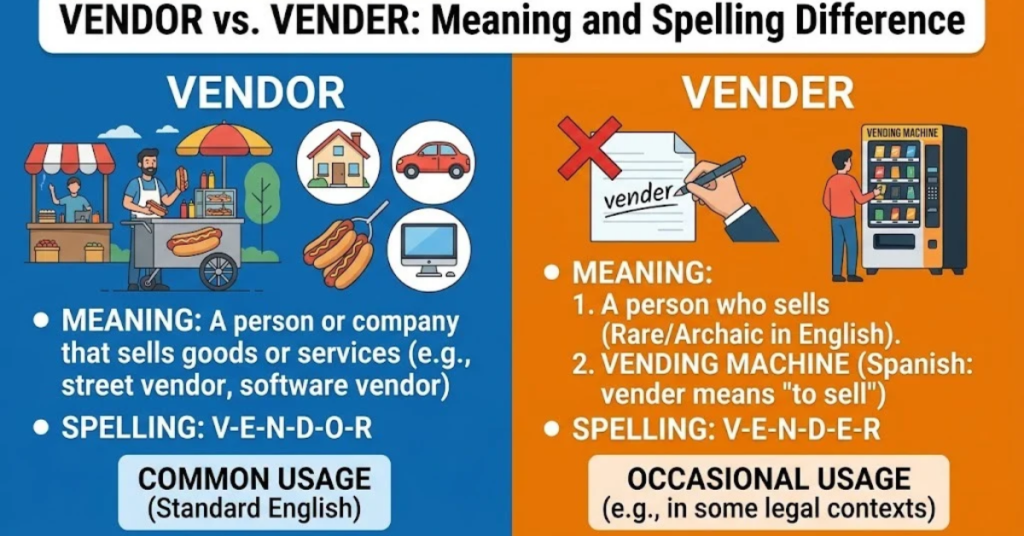
Have you ever wondered whether the correct spelling is vendor or vender? These two words look almost identical, and that single-letter difference can make it easy to confuse them. However, they have different meanings and are used in different contexts.
When comparing vendor vs vender, the key distinction is simple: vendor is a noun that refers to a person or business selling goods or services, while vender is a less common spelling of the word seller. In modern English, vendor is the standard choice in business, commerce, and everyday writing.
In this guide, you’ll learn the meaning of each word, see practical examples, explore their spelling differences, and discover a simple way to remember which one to use.
Vendor vs Vender Meaning
Although the words are closely related, they are not equally common. Understanding their definitions will help you choose the right spelling for emails, school assignments, business documents, and online content.
What Does Vendor Mean?
A vendor is a person, company, or organization that sells products or provides services to customers or other businesses. The word is widely used in retail, procurement, technology, event planning, and commercial transactions.
For example, a clothing store that supplies uniforms to a school can be described as a vendor. Similarly, a company that provides accounting software to another business is a software vendor.
Here are some common types of vendors:
- Retail vendor: Sells products directly to consumers.
- Food vendor: Sells prepared food, snacks, or beverages.
- Software vendor: Develops or sells software products.
- Wholesale vendor: Supplies goods in bulk to retailers or other businesses.
- Event vendor: Provides services or products for weddings, conferences, and other events.
- Service vendor: Offers services such as cleaning, maintenance, or technical support.
Example sentences:
- The company selected a new vendor to supply office furniture.
- Several food vendors were present at the outdoor festival.
- Our IT department contacted the software vendor about the technical issue.
- The wedding planner confirmed the arrangements with every vendor.
In each sentence, vendor identifies someone who sells something or provides a commercial service.
What Does Vender Mean?
A vender is a less common spelling of vendor. It refers to a person or business that sells goods, and it is generally considered an alternative form rather than a spelling mistake in every context.
The word is much less common in contemporary English, especially in professional and business writing. Most dictionaries recognize vender as a variant of vendor, but readers are far more likely to encounter vendor in everyday use.
Example sentences:
- The street vender sold fresh fruit near the market.
- A local vender offered handmade crafts to visitors.
- The vender displayed several products at the fair.
These sentences demonstrate how vender may be used, but vendor would generally be the more familiar and widely preferred spelling in all three examples.
If you are writing a business proposal, website article, academic paper, or professional email, choose vendor unless you have a specific reason to preserve the alternative spelling.
Vendor vs Vender Spelling Difference
The spelling difference between vendor and vender comes down to just one vowel: the second letter after the initial v.
| Word | Spelling | Meaning | Common Usage |
|---|---|---|---|
| Vendor | V-E-N-D-O-R | A seller of goods or services | Very common |
| Vender | V-E-N-D-E-R | An alternative spelling of vendor | Uncommon |
Both words are associated with selling, but their popularity is different. Vendor is the established spelling used in most modern English-language publications, business records, and commercial communication.
Why Is Vendor the Preferred Spelling?
The spelling vendor is firmly established in modern English. It appears regularly in business terminology, including phrases such as vendor management, vendor agreement, vendor payment, and vendor registration.
The spelling vender is less frequently used and may look unfamiliar to many readers. Although it can be correct as a variant, using it in professional writing may lead some readers to assume that it is a typo.
For clear, consistent communication, vendor is the safest spelling to use.
Vendor vs Vender Examples in Everyday English
One of the easiest ways to understand a word is to see how it appears in real situations. The following examples show how vendor is typically used and where vender might appear as an alternative.
Examples Using Vendor
In business:
- We need to compare three vendors before signing the contract.
- The vendor delivered the equipment earlier than expected.
- Please submit the vendor’s invoice to the finance department.
In shopping and retail:
- The market vendor sold fresh vegetables.
- The online vendor offers free shipping on selected products.
- Each vendor must display the prices of their products.
In technology:
- The software vendor released a security update.
- Contact the hardware vendor if the device needs replacement.
- The company is evaluating vendors for its new cloud service.
Examples Using Vender
- The street vender sold handmade jewelry.
- A vender at the fair offered locally produced honey.
- The vender packed the items for the customer.
These examples are understandable, but vendor would generally be the more natural choice for modern readers.
Which Word Should You Use in a Sentence?
Consider this example:
Incorrect for standard business usage: “We need to contact the vender about the delayed shipment.”
Preferred: “We need to contact the vendor about the delayed shipment.”
The first sentence uses a recognized alternative spelling, so it is not necessarily grammatically impossible. However, the second version follows the standard spelling most readers expect.
Vendor vs Vender in Business and Professional Writing
The distinction becomes particularly important in professional communication, where correct spelling helps maintain credibility and consistency.
The word vendor is commonly used across several industries. Understanding these expressions can help you recognize the correct spelling in different business situations.
Common Business Terms Using Vendor
- Vendor management: The process of selecting, monitoring, and maintaining relationships with suppliers.
- Vendor agreement: A contract that outlines the terms between a business and a seller or service provider.
- Vendor payment: Money paid to a company or individual for supplied goods or services.
- Vendor registration: The process of registering a seller with an organization.
- Approved vendor: A seller that has met an organization’s requirements.
- Vendor invoice: A bill issued by a vendor for products or services.
You will rarely see vender in these established business expressions. Using vendor ensures your writing aligns with standard commercial terminology.
Is Vendor the Same as Supplier?
The words vendor and supplier are often used interchangeably, but their meanings can differ slightly depending on the industry.
A vendor generally sells goods or services to customers or businesses. A supplier often refers to a person or company that provides materials, products, or resources to another business.
For example, a furniture store selling a desk to a customer is a vendor. The manufacturer providing desks to that store may be described as a supplier. In practice, the same company can be both a vendor and a supplier, depending on the transaction.
Neither term should be confused with vender, which is simply a less common spelling variant of vendor.
How to Remember the Difference Between Vendor and Vender
If you frequently mix up these spellings, a simple memory trick can help.
Use the O in Vendor for Organization
Think of the letter O in vendor as standing for organization. Vendors often work with businesses, organizations, customers, and commercial transactions.
For example:
- The organization hired a new vendor.
- The vendor supplied products to the company.
- The organization processed the vendor’s payment.
This is only a memory aid, not the word’s actual origin, but it can make the spelling easier to remember.
Follow These Three Steps
- Check the context. If you are writing about a seller, supplier, or service provider, you probably need vendor.
- Consider your audience. In business, academic, and professional writing, vendor is the conventional choice.
- Proofread your work. Check for accidental use of vender when vendor is intended.
Following these steps can help you avoid unnecessary spelling inconsistencies in your writing.
Common Mistakes When Using Vendor and Vender
Even though the difference is small, a few common mistakes are worth avoiding.
Mistake 1: Assuming vender is always a spelling error.
Vender is recognized as a variant spelling of vendor. It is uncommon, but that does not automatically make it incorrect.
Mistake 2: Using vender in professional documents.
Although the spelling may be understood, it can look unusual in contracts, business proposals, invoices, and formal emails. Use vendor for consistency.
Mistake 3: Confusing vendor with vendor-related job titles.
A vendor is the seller or service provider, while a vendor manager is someone who oversees relationships with vendors. These terms are related, but they describe different things.
Mistake 4: Assuming vendor and supplier always mean exactly the same thing.
Their meanings overlap, but the distinction can matter in procurement and supply chain management. Consider the specific business relationship before choosing between them.
Frequently Asked Questions About Vendor vs Vender
1. Is vendor or vender correct?
Both spellings are recognized, but vendor is the standard and much more common spelling in modern English. It is the preferred choice for professional writing and everyday communication.
2. What is the meaning of vendor vs vender?
Both words refer to a person or business that sells goods. Vendor is the conventional spelling, while vender is a less common alternative.
3. Is vender a real word?
Yes. Vender is a recognized spelling variant of vendor. However, it is uncommon in contemporary English, so vendor is generally preferable.
4. Why do people confuse vendor and vender?
The words differ by only one vowel and have essentially the same meaning. Because vendor is much more common, readers may mistake vender for a typographical error.
5. Should I use vendor or vender on my résumé?
Use vendor. It is the familiar spelling in professional settings. For example, you could write, “Coordinated with vendors to manage orders, deliveries, and supplier relationships.”
6. Is a vendor the same as a seller?
Generally, yes. A vendor is a type of seller, particularly in commercial settings. However, seller is a broader everyday term, while vendor is especially common in business and retail contexts.
7. What is the plural of vendor?
The plural is vendors. For example, “Several vendors participated in the trade exhibition.”
8. What is the difference between vendor and vender in American and British English?
Vendor is the standard and widely preferred spelling in both American and British English. Vender exists as a less common variant, but it is not the usual spelling in either variety.
9. Can I use vender in an SEO article?
You can discuss vender when the topic requires it, such as an article explaining the spelling difference. However, use vendor naturally throughout the article where appropriate, and avoid repeating either keyword unnaturally just to improve rankings.
10. What is the easiest way to remember vendor vs vender?
Remember that vendor is the standard spelling used in business. If you are writing about a company selling products, a service provider, or a market seller, vendor is almost always the best choice.
Conclusion: Vendor vs Vender Explained
When comparing vendor vs vender, the main difference is spelling preference rather than meaning. Both words can refer to a person or business that sells goods, but vendor is the established spelling used in modern English.
Although vender is a recognized alternative, it is much less common and may look like a typo in formal or professional writing. Choosing vendor helps keep your communication clear, familiar, and consistent.
The next time you write a business email, prepare a report, or create website content, remember this simple rule: When in doubt, use vendor.
For more practical language tips, explore related articles about commonly confused words, spelling differences, and everyday English usage.
